BPM ~ From Common Sense to Common Practice (Part 1): Process Performance Challenges

In my book, Business Process Management: Profiting from Process, I emphasized the critical nature of assessing everything we do with a performance lens firmly in place. I also outlined a number of pressures and challenges affecting organizational performance. These still hold true today. All of the following are front and center when it comes to corporate challenges that Business Process Management (BPM) must acknowledge and deal with:
- Shrinking business cycles,
- Commoditization of products and services,
- Cost pressures,
- Knowledge-based services,
- e-business,
- Globalization,
- Consolidation,
- Extended value chains,
- External stakeholder power growth
A Simple Profit / Performance Model
Figure 1 shows a simple chart to illustrate the options we face in dealing with these pressures. The purpose for all organizations is to be effective and efficient as well as increasingly adaptable. Ultimately, they must strive to make the most of their resources given their strategic intent and the multiple demands on these resources. I will refer to this objective as "to optimize profit" for want of a more universal term. Management's job is to defend attacks upon, and increase the area between, the curves.
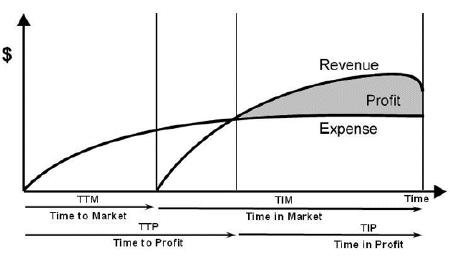
Figure 1. A Simple Process Performance Model
How is that possible? The first option is simple to identify the reduction of the cost of running the business, which is easy to say and do until you take into account other factors and consider the requirement to sustain the organization beyond the short term. Shortening the time to market is on everyone's radar screen since the life of products and services in market is still shrinking in many industries. Elevating the return line requires the identification of the right offerings at the right time and great coordination in being ready to go to market on time on many fronts. Lastly, by anticipating and designing for impending changes in product and service characteristics and components you can lengthen the time in market through planned adaptability, despite the fact that specific changes are indeterminate.
Everything you do organizationally or within a process needs to be assessed in these key performance terms. No organization is exempt. The question is how can this best be done? This series proposes a way of thinking and a way of managing that has been show to work based upon business processes as the synchronizer of 'what' work gets done and then 'how' work gets done. First, you have to change the way that organizations and managers collectively think about business processes. We will see this next time, when I discuss the evolution of this revolution.
# # #
Standard citation for this article:

About our Contributor:










Online Interactive Training Series
In response to a great many requests, Business Rule Solutions now offers at-a-distance learning options. No travel, no backlogs, no hassles. Same great instructors, but with schedules, content and pricing designed to meet the special needs of busy professionals.
How to Define Business Terms in Plain English: A Primer
How to Use DecisionSpeak™ and Question Charts (Q-Charts™)
Decision Tables - A Primer: How to Use TableSpeak™
Tabulation of Lists in RuleSpeak®: A Primer - Using "The Following" Clause
Business Agility Manifesto
Business Rules Manifesto
Business Motivation Model
Decision Vocabulary
[Download]
[Download]
Semantics of Business Vocabulary and Business Rules